Anime to Manga Chapter Guide: Where to Continue After the Latest Season
A practical method to find the correct legal manga chapter after an anime season without guessing chapter numbers, missing rearranged scenes or confusing novels and comics.

QUICK ANSWER
There is no reliable universal formula for the manga chapter after an anime season. Identify the last adapted scene, confirm the original work and its English publisher, compare the official chapter contents, and restart slightly earlier if the adaptation changed or omitted material.
Source record: Read the original source
Why a single universal chapter number cannot be trusted
The question sounds simple: an anime season ends, so which manga chapter should you read next? In practice, adaptations do not always preserve a one-to-one correspondence between published chapters and televised episodes. A director may combine several chapters, move an explanation to a different scene, rearrange a flashback or omit an interlude. Even when an official episode broadly covers a recognizable story arc, its last dramatic scene may not be the exact point where the printed edition stops.
That makes an automatically generated list claiming that Episode 12 always equals Chapter 48 a poor reference. A reliable handoff requires identifying the precise work, the last aired episode, and the source edition. If two websites give different numbers, compare their evidence rather than averaging them. This article provides a repeatable process for finding the continuation and explains why a reader may want to backtrack instead of beginning with the first unadapted event.
Step one: confirm which source material the anime adapts
Not every anime is directly based on a manga. Some originate as light novels, games or original screenplays; a comic released alongside the animation may itself be another adaptation rather than the original source. The Beginning After the End provides a useful category warning: its novel and Tapas comic are separate published versions with distinct episode and chapter systems. A direct equivalence between their numbering would need evidence, not just a shared title. The same caution applies to web novels and later printed collected editions.
Before searching for a continuation number, read the production's official description or the publisher's series page. Note whether the cited source is manga, a webtoon, a web novel or a novel volume. If the anime is original, there may be no next manga chapter in the sense the question assumes. Choosing the wrong medium can lead a reader to skip important material or purchase a product that retells the story from a different point.
Step two: establish the last episode actually released
An anime listing can contain multiple seasons, compilation films, special episodes and language versions. A weekly dub release may lag a subtitled episode, and a platform can organize a second cour under a different label. Record the exact season and final episode you watched, including the date if it was a current simulcast. The words latest season become ambiguous when a series has an international licensing delay or a split television run.
Do not use a trailer or promotional synopsis as proof that an entire manga arc has already been animated. For a newly announced show, there is no finished season to map. For example, Netflix says WIT Studio's The One Piece is planned to cover approximately the first fifty chapters of Oda's manga in its February 2027 first season. That gives an approximate scope, not a verified last page for each episode, and it would be premature to recommend a precise post-season chapter before release.
Step three: match an identifiable final scene rather than a headline
Once the episode is available, write down a distinctive, non-spoiler description of the final scene or story development without copying dialogue or posting copyrighted images. Then browse the official manga chapter or volume listings for the same sequence. A meaningful checkpoint might be the end of a confrontation or the introduction of a particular setting, but avoid assuming the episode title and chapter title will match. Adaptations can rename episodes or borrow titles from several adjacent chapters.
If the story transitions at the end of the episode, inspect a few nearby chapters in the legitimate edition to determine whether the adaptation used later material early. A brief look back is not wasted effort if it restores context that the screen version compressed. This method is more defensible than a page that automatically pairs two running numbers without explaining the match. An editor publishing an exact recommendation should record which episode and chapter were independently compared.
Step four: verify a legal English chapter source in the US
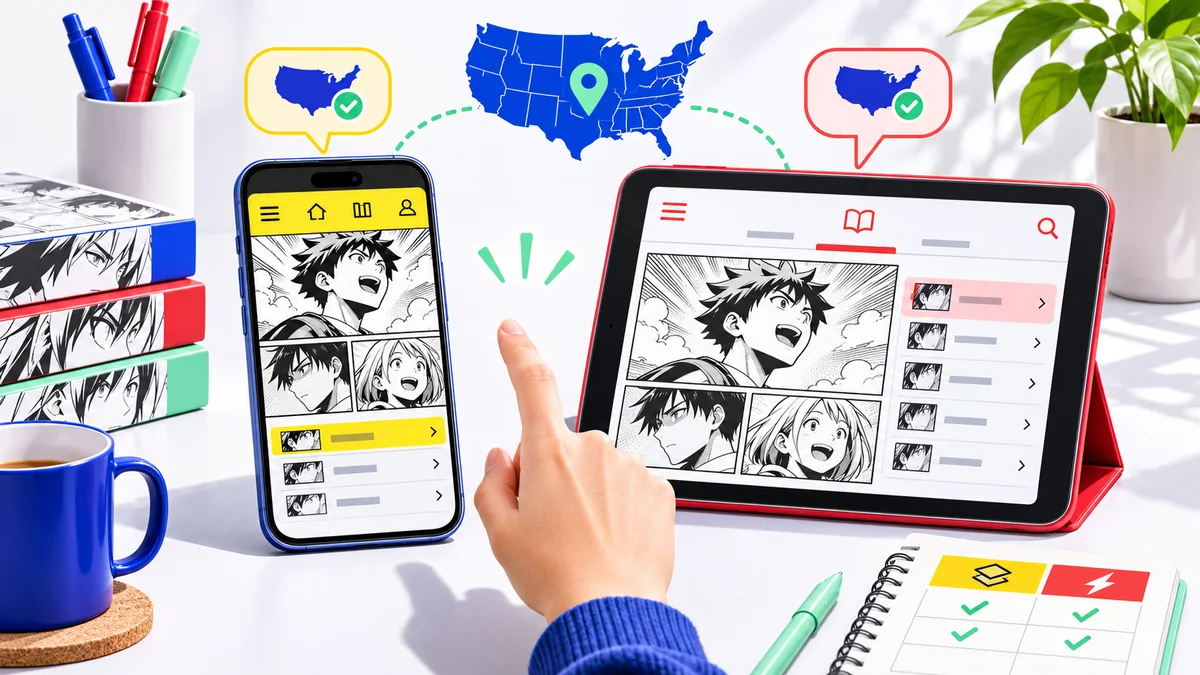
VIZ's Shonen Jump service publishes an official chapter directory for One Piece and other eligible series, and its FAQ explains access through its website and supported apps. MANGA Plus by Shueisha has its own chapter-access model, including a First Read Free feature on eligible ongoing English simulpub series through the app. These services are not identical and may not contain every title under the same terms. The official US series page should be your starting point for access conditions.
MANGA Plus explains that First Read Free has exceptions and that rereading a chapter after closing the viewer can require a subscription; some titles or chapters are ineligible. That means available to read and permanently free to reread are different statements. Before relying on a continuation guide, verify whether you can open the necessary backtracking chapters and whether the chapter numbers shown online correspond to a collected volume edition. Subscription rules can change, so use the current service FAQ.
Step five: distinguish individual chapters from collected volumes
A manga volume bundles chapters for print or digital book sale, often on a different calendar from the official weekly serialization. The newest English volume in a US store may stop well before the latest digital chapter. A reader who asks for the next volume after an anime is therefore asking a different question from someone who wants the next individual chapter. The correct answer should state both the edition and the numbering system, rather than treating Chapter 120 and Volume 12 as interchangeable.
Check the publisher's table of contents or volume description for the included chapters, especially if there are omnibus or deluxe editions. Release dates also differ between Japanese and English markets, so a volume visible in an overseas catalog might not yet be on sale in America. If an article recommends buying a particular book, it should provide the publisher's US product listing and explain the contents. Otherwise, a reader can spend money on an edition containing material already watched.
Worked example: why The One Piece requires a future recheck
Netflix's official preview says the WIT Studio adaptation will begin with East Blue and reach roughly the first fifty chapters in seven episodes. A rushed guide might therefore tell every viewer to begin at Chapter 51 when the last episode finishes. That number is not justified yet. Roughly fifty is a planning description, and the season has not launched as of November 15, 2026. The actual final adapted sequence, possible rearrangements and omitted character moments must be verified after the release.
The proper pre-release entry would say: Source work, Eiichiro Oda's One Piece manga; planned coverage, approximately Chapters 1 through 50; Netflix season release, February 2027; exact post-finale chapter, not yet verified. Once the episodes arrive, an editor can inspect the conclusion and revise the handoff. Keeping the unverified field empty is useful information because it stops an AI-generated answer from inventing precision that the primary source has not supplied.
A reusable continuation checklist for any series
Record the original work and format, the exact season and last episode watched, its official release date, the last on-screen story event, and the corresponding section of the licensed source. Then check whether the adaptation skipped, condensed or reordered significant material. If it did, recommend beginning a few chapters earlier and explain why. Finally, link to the official English chapter or volume entry, identify the US territory when relevant, and date the verification. These fields are enough for a useful, auditable recommendation.
An editor can create a separate page for each popular series only when the actual ending can be inspected and the handoff independently checked. Do not mass-produce hundreds of guesses from episode numbers or label them personally reviewed without doing the comparison. A precise answer supported by two primary records is more valuable than an enormous table of unsupported chapters. This guide remains an evergreen method; title-specific recommendations should change as new seasons and new translations arrive.
Based on VIZ's official Shonen Jump digital chapter and access FAQ, checked alongside MANGA Plus's First Read Free rules. This report distinguishes confirmed details from information not established by the original source.
View primary sourceSource date / checked:
Found a factual error? Contact the editorial desk.