The One Piece Netflix Remake: February 2027 Release, Episodes and Original Anime Differences
Netflix confirms WIT Studio's The One Piece for February 2027: seven episodes, about 300 minutes, the first 50 manga chapters, and a new East Blue adaptation.
QUICK ANSWER
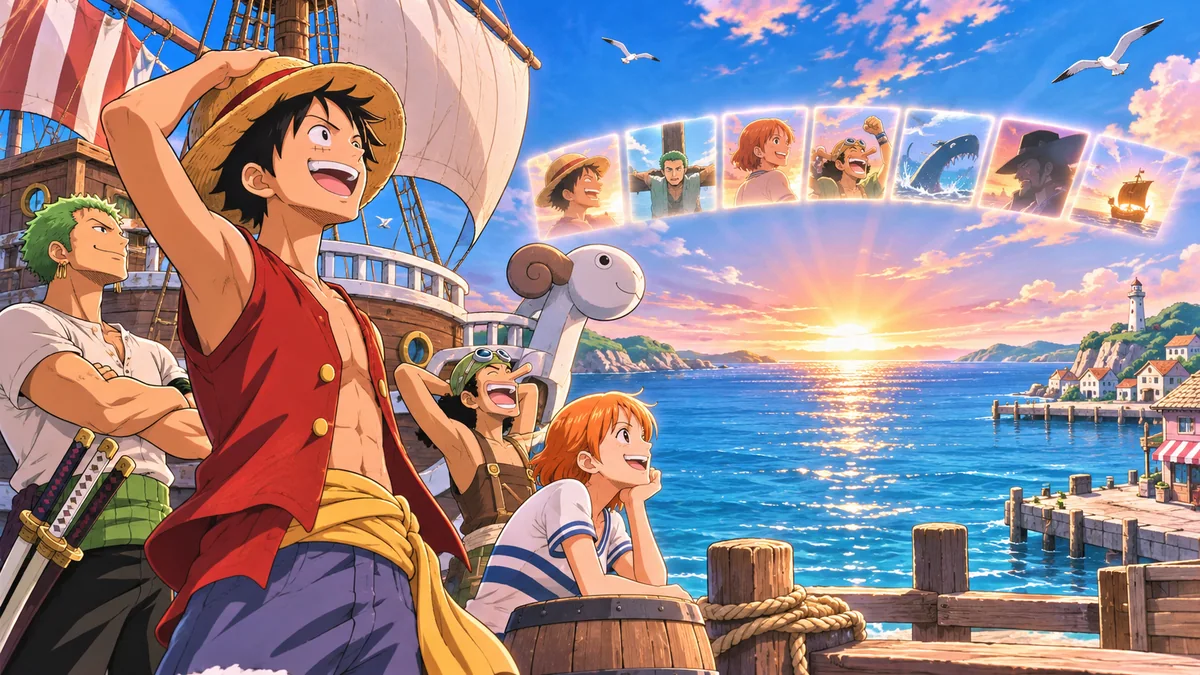
Netflix confirms that WIT Studio's The One Piece will release all seven episodes in February 2027, adapting roughly the first 50 chapters of Eiichiro Oda's manga in about 300 minutes. It is a new East Blue anime, separate from the long-running TV series and Netflix's live-action show.
Source record: Read the original source
The confirmed US release window and viewing format
Netflix identifies February 2027 as the release month for The One Piece, the new animated adaptation of Eiichiro Oda's manga. The announcement says seven episodes will arrive together, so this is not currently described as a title that viewers must follow through a weekly scheduled premiere. Netflix's US Media Center likewise lists the production as coming soon for the United States. An exact calendar day is a separate fact: the cited announcement establishes the month, not a named February date.
This distinction is useful when planning a watch party or deciding when to subscribe. A seven-episode batch can be watched at any pace after launch, assuming the published plan is maintained. It is not accurate to convert a February window into a February 1 or February 27 premiere merely because a search page needs a specific date. Until Netflix announces the day or an exception to its typical release timing, keep a calendar reminder for the month and check the official title page.
Seven episodes, 300 minutes and approximately 50 manga chapters
Netflix's confirmed Season 1 outline is unusually concrete: seven episodes, about 300 minutes in total, and an adaptation of approximately the first 50 chapters of the original manga. The published description says this part of the story leads toward Luffy's encounter with Sanji at the floating restaurant Baratie. Those points give newcomers a clear sense of the material covered without inventing exact chapter boundaries for each episode.
The numbers also explain why the remake cannot simply be compared one-for-one with the old series' episode count. Around 300 minutes divided across seven episodes implies a different average length from the usual short television installment, but that arithmetic is not an official runtime for any individual episode. A season can vary the duration of its entries. Likewise, covering roughly 50 chapters does not guarantee every scene or moment survives unaltered. Pacing and adaptation decisions are best judged after the episodes are available.
What is being remade and what is not
The One Piece begins again from Chapter 1 and the East Blue story. It is a separate animated retelling rather than the next season of the long-running One Piece television anime, which originated in 1999 and continues through its own production history. That distinction matters for search terms: a new viewer asking for the remake should not be directed to the newest numbered episode of the existing series, while a returning viewer should not expect the new seven-part season to pick up the old show's current storyline.
It is also not Netflix's live-action One Piece. That adaptation uses actors, physical sets and a different production format; WIT Studio's project is animation. Netflix distributes more than one One Piece production, so the platform name alone does not identify which version a headline refers to. Look for the full uppercase project title THE ONE PIECE and the WIT Studio credit when comparing trailers, release announcements and the service's search results.
WIT Studio's announced creative team
Netflix lists WIT Studio as the animation company and Masashi Koizuka as director, with Hideaki Abe as assistant director and Taku Kishimoto handling series composition. Character design and chief animation direction are credited to Kyoji Asano and Takatoshi Honda. These are identifiable production roles, not proof that a preview clip contains a particular unannounced battle, voice cast or finished episode. The official team credits offer a stronger way to identify the project than an unofficial promotional image circulating online.
A reader comparing adaptations may reasonably be interested in how a fresh team approaches a familiar story. New character designs, staging and episode structure could change the viewing experience even when the manga foundation remains the same. Until the finished series is released, however, claims about superior animation, removed scenes, changed personalities or censorship would be opinions or speculation. This guide separates the publicly announced staff and coverage from judgments that only a finished episode can support.
What the original anime still offers
The long-running television adaptation represents a different way of experiencing One Piece: a large collection of episodes built up across decades, with its own broadcast pacing, music, performances and production eras. The remake's initial seven episodes cover the story's beginning, not the entire journey. Someone who wants to continue far beyond early East Blue cannot rely on the first remake season alone to reach later arcs. The original anime remains a different, much longer commitment, with availability depending on the US service and the particular season.
Neither version has to be described as the universally correct edition. A first-time viewer may prefer the smaller initial commitment of a new adaptation, while a fan interested in the history of the franchise might choose the original run. The useful comparison concerns starting point, amount of material, production style and next-step options, rather than promising that the newer edition will replace the older one everywhere. Readers who want the source itself can begin with Oda's manga at Chapter 1.
How this differs from Netflix's live-action adaptation
The live-action and animated projects share the underlying manga characters and premise but use different production methods. Netflix's live-action One Piece is a separately named show with its own seasons, while The One Piece is a new animated series led by WIT Studio. A trailer showing actors should not be cited as footage from the upcoming anime, and a cast announcement about the live-action show should not be automatically copied into the animated remake's credits.
This distinction also affects watch order. Because the new anime explicitly begins at the start of East Blue, someone who has watched neither format can approach it without having completed the live-action storyline. Conversely, having watched the live action may make characters and settings familiar, but it does not establish that individual scenes will be identical in the animated retelling. Different adaptations choose different transitions, durations and emphases even when they follow the same broad manga events.
A spoiler-safe starting plan for new US viewers
Begin with the question you actually want answered. If you want the first fifty manga chapters adapted into a contained new animated package, add The One Piece to your Netflix list and watch for its February 2027 arrival. If you want the longest ongoing anime journey right now, look for the original series under its separate listing. If you prefer to choose your own pace and compare adaptations, start at Chapter 1 of the legally published manga. Each option begins with Luffy but has a different release structure.
Do not look up a numerical mapping between Episode 1 of the remake and Episode 1 of the old show as though the projects must share the same running time. The remake's seven episodes and roughly 300-minute duration are the verified limits of its first announced installment. A more precise episode-by-episode guide should be built after Netflix publishes the episode titles and runtimes, preferably by directly comparing the actual entries without reproducing copyrighted scenes or script dialogue.
What has not been officially specified
The primary Netflix materials checked for this report do not give an exact February day, a weekly drop schedule, or confirmed detailed allocations of manga chapters to individual episodes. They do confirm seven episodes dropping together and the broad East Blue coverage. Claims about a specific Friday, a secret eighth episode, a scene-by-scene remake schedule or the content of later seasons would require new official evidence before being placed in a factual release calendar.
An appropriate editorial update should cite the newly dated Netflix statement when an exact launch date, language options or additional staff announcements appear. A social account rephrasing an existing February window is not the same as a new date. Our reporting uses the original 2026 announcement date for context and displays a separate article publication and revision record. That makes it easier for a search engine, AI assistant or human reader to distinguish currently sourced answers from speculation.
Based on Netflix Tudum's official THE ONE PIECE release, episode and production guide, corroborated by the Netflix US Media Center entry. This report distinguishes confirmed details from information not established by the original source.
View primary sourceSource date / checked:
Found a factual error? Contact the editorial desk.