What Does the Big 3 Mean in Anime? One Piece, Naruto and Bleach Explained
Learn what anime fans mean by the Big 3, why One Piece, Naruto and Bleach share the label, and how to start each series without treating fandom shorthand as a ranking.
QUICK ANSWER
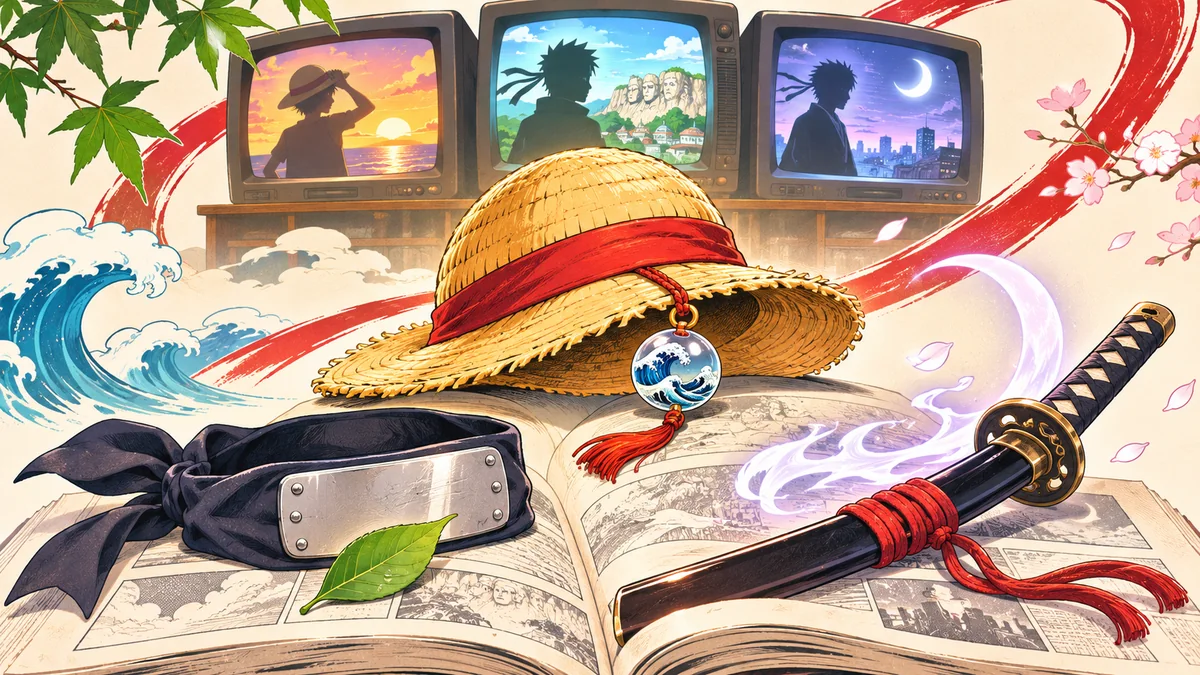
The Big 3 is a fan and media shorthand for One Piece, Naruto and Bleach, three long-running Shonen Jump manga whose anime became unusually visible together in the 2000s. It is not an official award, a permanent ranking, or a claim that only these three series matter. This guide explains the label, what the series share, where they differ, and how a new viewer can choose a starting point.
Source record: Read the original source
The quick definition
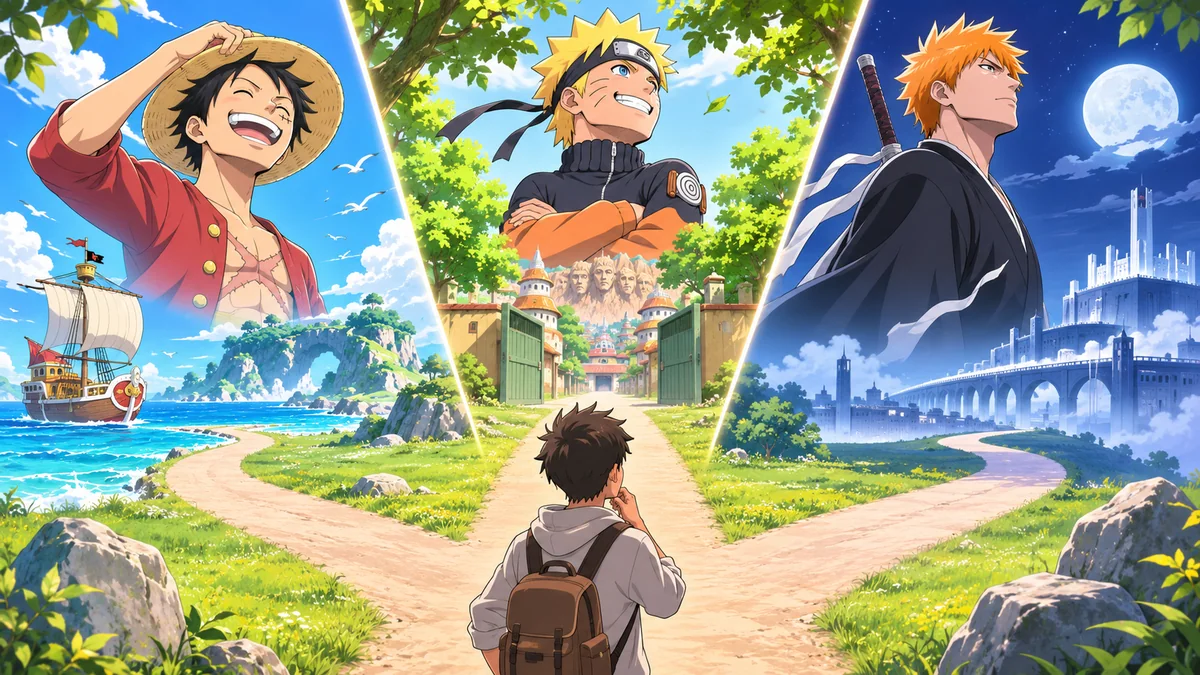
When anime fans say “the Big 3,” they usually mean One Piece, Naruto and Bleach. The phrase points to three major Shonen Jump series that were prominent in roughly the same era, especially through the 2000s, and whose anime reached a large international audience. It is a piece of fandom vocabulary: useful shorthand, not a formal title handed out by a publisher or a permanent top-three chart.
The word “big” is best understood as a description of cultural reach, visibility and shared moment in the conversation. It does not mean the three shows have the same story, genre balance or quality, and it does not mean other anime were smaller or less important. A viewer can love all three, prefer just one, or decide the label tells them nothing about what to watch tonight.
Why these three are grouped together
All three began as manga serialized in Weekly Shonen Jump and became long television adaptations built around an expanding cast, high-stakes conflicts and a lead character whose goals keep the story moving. The overlap mattered: viewers could follow multiple weekly adventures, trade theories, compare fights and recognize the titles even if they had not read the manga.
Their international growth also gave the label a practical meaning for English-speaking fans. One Piece brought a long adventure across many islands and cultures; Naruto centered on a young ninja trying to earn recognition and protect his bonds; Bleach introduced a sharp, supernatural battle world built around Soul Reapers. The shows were distinct, but they occupied a similar shelf in shops, TV schedules and online conversations.
A mini map of the three
ONE PIECE → a pirate crew, a huge sea, layered mysteries and a long voyage toward a world-changing treasure. Choose it if you want an expansive adventure where the cast and setting keep widening.
NARUTO → a rejected young ninja seeks recognition, friendship and a future for his village. Choose it if you like rivalries, training arcs, inherited conflict and emotional character payoffs.
BLEACH → a teenager enters a hidden spirit world and grows into a Soul Reaper. Choose it if you want supernatural action, distinctive character designs and sword-centered battles.
It is not an official ranking
There is no official “Big 3” trophy, licensing category or fixed list that tells fans which series are the three greatest of all time. The phrase describes a particular historical grouping in pop culture. Lists made later may use “Big Three” to mean something else, such as a newer group of dark fantasy hits or three favorites in a genre. Those later lists are separate opinions, not corrections to the older shorthand.
This is why a headline should explain its meaning instead of assuming every reader already agrees. If an article says “the Big 3 are back,” it should tell readers whether it means One Piece, Naruto and Bleach or a different trio. The historical label remains useful as long as it is treated as an era-specific fan phrase, rather than a measured fact about objective quality.
What the label leaves out
Calling the three series a group can hide how differently they handle time and structure. One Piece is an ongoing voyage with a deliberately huge canvas. Naruto has a clear transition from its original series into Naruto: Shippuden, which advances the cast and raises the scale. Bleach's original television run completed its story in 366 episodes, and its later Thousand-Year Blood War adaptation animates the concluding arc as a separate continuation.
The label also leaves out films, specials, manga and spin-offs that can confuse a first-time viewer. You do not need to watch every theatrical movie to understand the central television story in any of the three. Most films are optional side stories or alternate presentations; if a specific movie is essential to continuity, use the relevant official watch guide rather than assuming every film sits between two episodes.
When someone uses the label in a recommendation, ask what they mean by it: historical prominence, a personal top-three list or a newer cluster of shows. A clear answer separates those ideas. For this guide, Big 3 means the familiar One Piece, Naruto and Bleach grouping; the word is not a search-volume measurement, a platform chart or a promise that a new viewer will enjoy every one.
How to pick one without a fandom argument
Ask what kind of commitment sounds fun. One Piece is the largest time investment and strongest fit for a viewer who wants a world that unfolds gradually. Naruto is a natural pick for someone drawn to a central rivalry, team bonds and a clear coming-of-age arc. Bleach is the most compact of the three in completed television episode count once the final arc is included, while still offering a long-form shonen journey.
Then try a small sample instead of deciding from a ranking. Watch the first three to five episodes with subtitles or an English dub, whichever you usually enjoy. Notice whether the humor, visual style and episode rhythm work for you. A favorite character list or “best fight” compilation is poor evidence about whether you will like the opening stretch, because clips remove the setup that makes a story land.
A useful first-watch order
If you want the shortest path into this particular conversation, start with Bleach, then Naruto, then One Piece. That is only a time-management suggestion, not story chronology: the series are unrelated universes and can be watched in any order. Pick One Piece first if the scale of the voyage is what excites you, and pick Naruto first if you already know its characters from games or memes.
On the manga side, all three are available through official Shonen Jump and VIZ channels in the United States, subject to the current service catalog and membership terms. The anime catalogs vary by provider and can differ by dub, subtitle, film and region. Before starting, check the exact series title, season or episode range, and language menu in your own account.
Quick answers
Are the Big 3 the three best anime? No. It is a popular historical shorthand, not a quality ranking. Does One Piece connect to Naruto or Bleach? No; the stories are independent. Do I have to watch the movies? Usually not for the main television storyline. Which is shortest? Bleach is the least extensive of the three in completed TV episodes when the original series and completed Thousand-Year Blood War adaptation are counted, while One Piece is still ongoing and well beyond 1,000 episodes.
Use the term as a doorway, not a rule. If you are discussing the phrase with someone new, name the three series, give a sentence about what each does well, and make it easy for that person to choose by mood and time. The best answer to “which one should I watch?” is the one that makes a new viewer press play and enjoy the next episode.
Based on VIZ / Shonen Jump official series catalog, checked November 20, 2026. This report distinguishes confirmed details from information not established by the original source.
View primary sourceSource date / checked: · Rechecked
Found a factual error? Contact the editorial desk.