Solo Leveling Season 2 Episode 2 Review: I Suppose You Aren't Aware
Source-based review of Solo Leveling Season 2 Episode 2, “I Suppose You Aren't Aware,” examining its story choices, stakes, and place in Jinwoo's progression.
Editor-in-Chief: Satya Prasad
Spoiler notice: this article discusses released installment events described by the sources.
The episode expands monster conflict into a question of recognition and threat perception. The title signals that knowledge itself is at stake: the people across the gate may understand something about Jinwoo that he has not yet chosen to face.
The episode's dramatic job
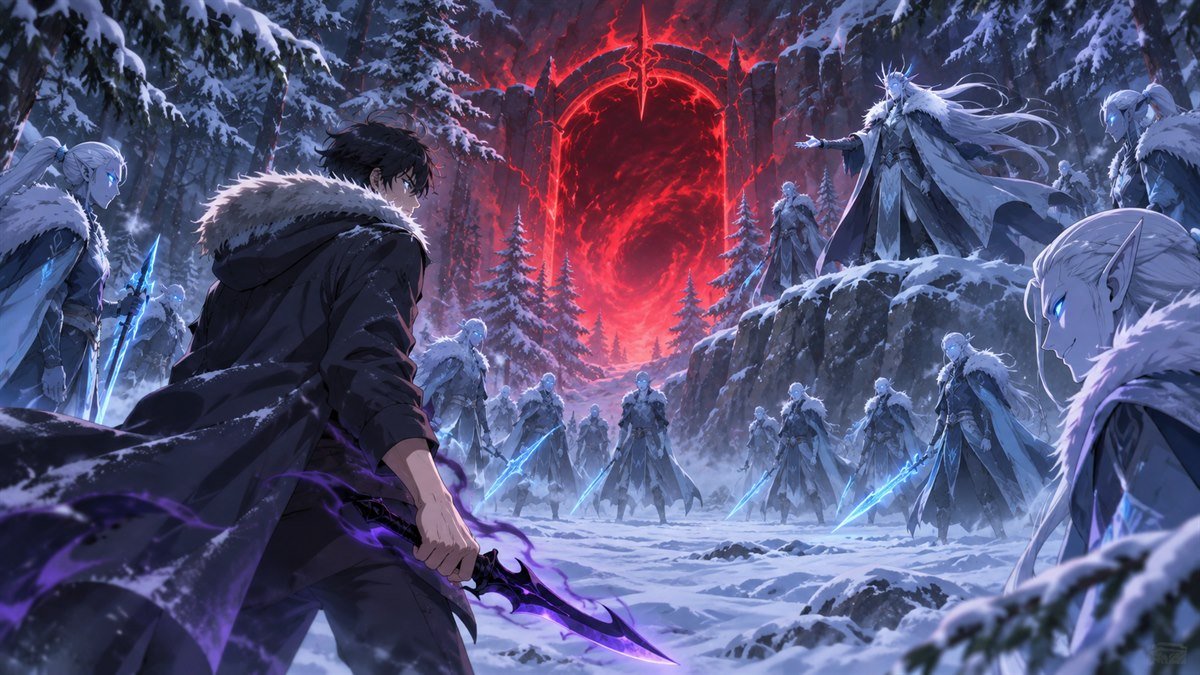
The documented plot turns on a clear event. A red gate traps Jinwoo with a pack of Ice Elves who question whether he is human. The red gate transforms a dungeon assignment into isolation with a hostile intelligence on the other side. That gives the installment a concrete dramatic job. It sets the scale of risk before asking whether Jinwoo can meet it, and connects this episode's event to the season's larger progression. The shift matters because Solo Leveling's power fantasy depends on an earlier sense of vulnerability: a victory or new ability only registers when the story has established what it can change. This episode asks the season to take that starting condition seriously.
Jinwoo's choice and its cost
Jinwoo's defining choice is shown through a specific decision. Jinwoo must survive a group that can speak, judge, and coordinate rather than behave like anonymous targets. A stronger hunter can survive situations that once seemed impossible, but survival alone does not explain what he values. This decision places a personal aim or obligation beside the visible challenge, and that pairing gives his growth a human scale. It also leaves room for friction: other hunters may see rank, strength, or usefulness where Jinwoo sees a particular person or promise. The episode works best when that difference changes what he is willing to do.
The rules behind the conflict
The episode's rules become concrete at one pressure point. The gate's rules separate its occupants from ordinary rescue and make human identity part of the encounter. The System and the hunter institutions do not offer the same kind of power. One gives Jinwoo a private route to change; the other sorts people publicly and shapes the risks they can take. That divide is useful story material because it distributes status, money, and safety rather than merely decorating a battle with statistics. The episode tests a specific part of that arrangement and leaves open whether Jinwoo can use an advantage without being trapped by the narrow measures that once defined him.
Structure and payoff
The episode record gives this sequence a clear direction. The confrontation presses Jinwoo's capability against a world that has not agreed on what he is. That movement works when new information changes a character's options instead of serving only as a teaser for a larger enemy. The installment has to balance its immediate event with the season's onward motion, and it gives the turn a connection to survival, trust, or responsibility. That is a stronger basis for suspense than an unexplained promise that the next opponent will be more powerful. In a progression story, visible escalation can become predictable unless each step changes the meaning of the journey.
What works, and what stays thin
There is a clear strength here. The episode expands monster conflict into a question of recognition and threat perception. That idea makes Jinwoo's changing position matter beyond a score or rank. There is also a limitation. The Ice Elves' challenge is strongest when it complicates the familiar hunter-versus-monster divide; if treated only as taunting, it risks becoming atmosphere without consequence. It matters because power escalation needs a second source of drama—relationships, social rules, and consequences that cannot be settled by another upgrade. This episode points toward that wider potential, even where some supporting people or mechanics remain lightly developed. The next challenge is to let the installment's strongest idea produce consequences rather than repeat it as a familiar beat.
How it moves the season forward
The episode leaves the season in a specific position. The title signals that knowledge itself is at stake: the people across the gate may understand something about Jinwoo that he has not yet chosen to face. That ending creates a meaningful next question instead of simply resetting the story. Its contribution is not measured only by whether Jinwoo wins; it is measured by what his route forward asks him to risk, understand, or protect. Season 2 has its own larger arc, but each installment still needs a distinct turn inside it. This review is source-based and evaluates documented story events and their narrative function; it does not claim a shot-by-shot account or firsthand viewing.
Research sources and release verification
Research checked . The publisher establishes release facts; independent sources inform the analysis above.
Only the publisher or authorized streaming service controls access, release times and language options.
Open the official installment listing