Solo Leveling Chapter 2 Review: A Vote Weighted by Need
Chapter 2 turns a modest raid into a consequential choice: the hunters find a second dungeon entrance, and Jinwoo’s financial responsibilities help decide whether the party explores it.
Editor-in-Chief: Satya Prasad
Spoiler notice: this article discusses released installment events described by the sources.
The chapter’s most effective suspense comes before any monster appears. Jinwoo understands the danger well enough to hesitate, but his family’s needs make a bad risk feel like the only available chance. The vote is a compact character test and a clean bridge into the Double Dungeon.
The raid is work before it is spectacle
Chapter 2 keeps the series grounded in the economics of low-rank hunting. Jinwoo is disappointed by how little an E-rank magic stone is worth beside the injuries and danger required to earn it. That imbalance gives the raid a workplace texture: hunters take the jobs available to them, compare the payout with the risk, and have to decide whether the math works.
This detail extends Chapter 1’s practical motive without repeating it. Jinwoo is not merely called weak; the reward structure makes his weakness expensive. Lower returns mean that he must accept more exposure to danger for less security. The chapter connects the fantasy’s rank ladder to a familiar pressure, where the person with the least leverage has the fewest safe choices.
A healer notices what Jinwoo hides
Joohee’s concern is an important counterweight to Jinwoo’s silence. She can see how often he gets hurt and asks why he keeps doing this, but he does not give her the full explanation. Their exchange suggests a closeness built from repeated raids, while also showing how embarrassment can keep practical hardship private even among people who care.
That restraint makes the family stakes more believable than a long speech would. Jinwoo’s need is not a heroic declaration made to persuade the group; it is information he carries while others debate the danger. Joohee’s worry gives the decision a human cost, because entering the second dungeon means overriding the one person in the party who is visibly concerned for him.
The vote gives everyone a share of the risk
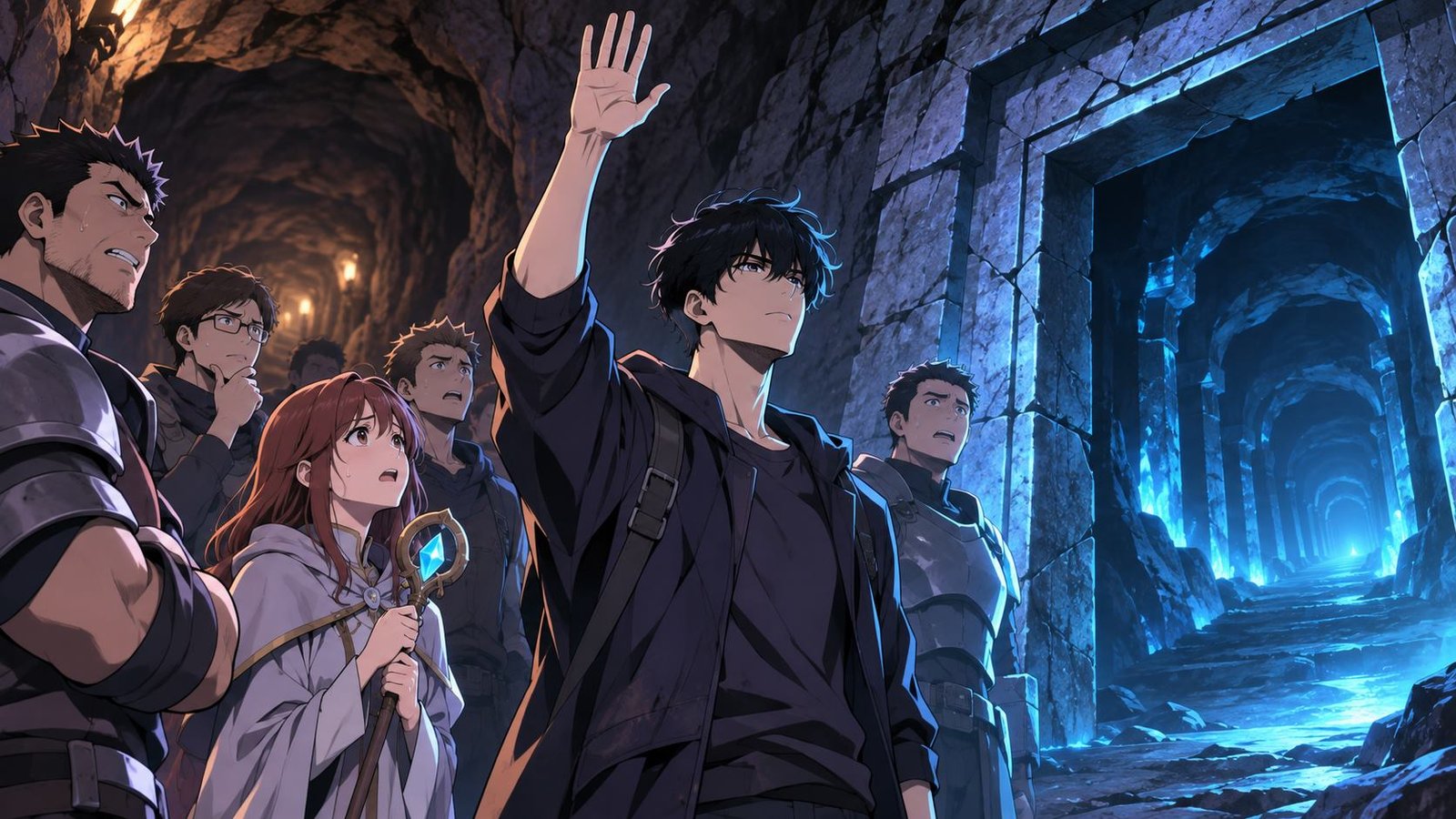
The newly discovered entrance raises a familiar conflict between caution and immediate profit. Reporting it to the Hunter Association might preserve safety and procedure, while waiting could let another team claim the boss and the reward. The party’s vote makes that conflict visible rather than letting its leader simply dictate what happens next.
Jinwoo’s deciding vote is the chapter’s central character beat. He is not suddenly fearless, and the scene does not pretend he has calculated a safe victory. He thinks about his mother’s care and his sister’s future, then agrees to go. Need narrows his options; courage here is the willingness to accept a risk he would otherwise refuse.
A numerical choice becomes a moral one
The chapter’s structure is effective because it converts a question about dungeon procedure into a decision with unequal consequences. The hunters are formally allowed to vote, but Jinwoo’s reason for breaking the tie is more intimate than anyone else’s. A shared adventure begins with a choice that will be carried most heavily by the person who has the least power.
That imbalance also creates tension for the chapters ahead. The party can describe its decision as collective, yet Jinwoo’s vote has made him partly responsible for bringing Joohee and the others into the hidden room. The story does not need to accuse him of recklessness; it only has to let the reader remember the reason he raised his hand.
A hidden entrance that changes the genre
The second entrance is a strong serial hook because it changes what the ordinary raid can promise. A second chamber suggests a rare reward, but its presence also means the hunters have encountered something outside their usual experience. The chapter delays the payoff, letting the group’s argument make the threshold feel consequential before anyone knows what waits beyond it.
The limit is that several supporting hunters still function primarily as votes for or against the plan. That compression is useful for keeping momentum, though it makes the group feel like a decision-making body more than a set of distinct people. The coming dungeon crisis will give those positions more meaning if the story continues to track who trusted the choice and who was pressured by it.
Research sources and release verification
Research checked . The publisher establishes release facts; independent sources inform the analysis above.
Only the publisher or authorized streaming service controls access, release times and language options.
Open the official installment listing